The Tang Dynasty (618-907 CE) was one of the most prosperous and culturally vibrant periods in Chinese history. As the Silk Road brought goods, ideas, and people from across Asia and beyond, Chinese artists absorbed these influences and created something uniquely their own. Nowhere is this more evident than in the sancai, or "three-color" glazed ceramics that have become synonymous with Tang artistic achievement.
What is Sancai?
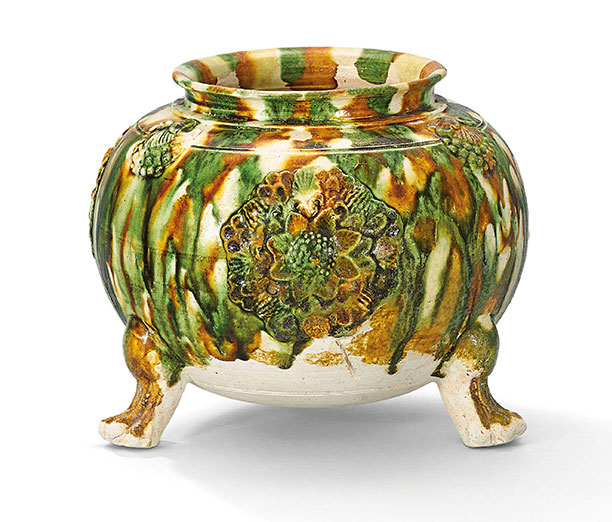
Sancai, which literally means "three colors" in Chinese, refers to a type of lead-fluxed glaze that typically combines cream, green, and amber or brown tones. However, the term is somewhat misleading—sancai glazes can actually include additional colors such as blue, black, and white, with some pieces featuring up to six or more distinct hues.
The characteristic flowing, splashed appearance of sancai glazes was achieved by applying different colored glazes to a piece and allowing them to run and mingle during firing. This created unpredictable, organic patterns that celebrated the transformative power of fire rather than attempting to control it completely.
The Chemistry of Color
The colors in sancai glazes were achieved through the use of metallic oxides dissolved in a lead-based flux:
- Copper oxide produced the distinctive green tones, ranging from pale celadon to deep emerald
- Iron oxide created the amber, brown, and cream colors depending on concentration and firing conditions
- Cobalt oxide was occasionally used for blue, though this was rare and precious as cobalt had to be imported from Persia
- Manganese could produce purple or brown tones
The lead in the glaze served two important functions: it lowered the melting point of the glaze, allowing it to fuse at the relatively low temperatures achievable in Tang kilns, and it gave the finished surface a brilliant, glassy shine that enhanced the depth and richness of the colors.
Forms and Functions
Tang sancai wares took many forms, reflecting both practical and ceremonial purposes:
Vessels for Daily Life
Large jars, ewers, and bowls were produced for practical use, though the lead content of sancai glazes made them unsuitable for storing acidic foods or beverages. These vessels often featured applied decorative elements such as flanges, bosses, and floral motifs that created interesting textures beneath the flowing glazes.
Tomb Figures
The most spectacular sancai pieces were the tomb figures created to accompany the deceased in the afterlife. These included:
- Horses: Often depicted with elaborate trappings and flowing manes, Tang horses are among the most admired ceramic sculptures ever created
- Camels: Symbolizing the Silk Road trade that brought wealth to the Tang empire
- Court ladies: Elegantly dressed figures that offer insights into Tang fashion and beauty standards
- Guardians and officials: Protective figures meant to serve the deceased in the afterlife
- Foreigners: Depictions of Central Asian traders, musicians, and diplomats that reflect the cosmopolitan nature of Tang society
Production and Technique
Sancai wares were produced in specialized kilns, with the major production centers located in the northern provinces of Henan and Shaanxi, near the Tang capitals of Chang'an (modern Xi'an) and Luoyang. The proximity to the imperial court ensured a steady demand for high-quality pieces.
The production process involved several steps:
- Clay preparation: The earthenware body was made from local clays, often mixed with ground quartz to improve its whiteness and strength
- Forming: Vessels were thrown on the wheel or molded, while figures were typically made in piece molds
- Bisque firing: Pieces were fired once at around 1000°C to harden the clay
- Glaze application: Glazes were applied by dipping, pouring, or brushing, with different colors carefully positioned to create the desired effects
- Glaze firing: The final firing at around 800°C melted the lead glazes without distorting the forms
Legacy and Influence
The sancai tradition continued to influence Chinese ceramics long after the Tang Dynasty ended. During the Liao and Jin dynasties, sancai-style glazes were adapted for architectural tiles and ornaments. In the Qing Dynasty, potters deliberately revived Tang sancai techniques as part of a broader interest in historical styles.
Sancai also influenced ceramic traditions beyond China. The flowing, multicolored glazes of Tang wares may have inspired Islamic potters, and Chinese sancai pieces were highly prized in medieval Europe, where they were often mounted with precious metal fittings.
Today, Tang sancai pieces are among the most sought-after Chinese ceramics in the world. Museums from Beijing to New York display these vibrant works, and collectors compete fiercely for the finest examples at auction. The flowing glazes that once adorned Tang tombs now bring the spirit of that golden age to life for viewers around the world.